
The Gift of Generosity in Early Childhood Education
27 January 2026

Keynote Speech
Written by Dr Jane Ewens
I want to talk about a value that I believe lies at the very heart of early childhood education—generosity.
Now, when most people hear the word “generosity,” we often picture giving gifts, donating money, or sharing resources, maybe even chocolate. And yes, chocolate is a very generous gift—especially if you share it in the staffroom! But in our work as early childhood teachers, generosity goes far deeper, it is about much more than things. It is not about the size of what we give, but the spirit in which we give it. It is an attitude of the heart. It is manaakitanga!
In early childhood education, manaakitanga shows up every day in countless small but powerful ways. In our learning spaces, it looks like:
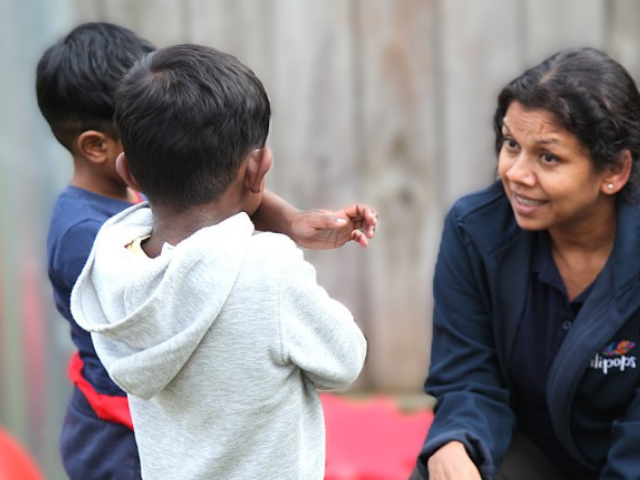
- Crouching down to listen carefully to a child’s very long story about a slug they found in the garden—even if that story has three beginnings, no middle, and definitely no end.
- Giving your patience to a toddler who is determined to put their shoes on the wrong feet… every single day.
- Offering a smile to a colleague even when you haven’t had a proper coffee yet—that, I believe, is the highest form of generosity!
- And being willing to keep showing up, day after day, giving your energy and care, even when no one is watching.
Manaakitanga in our profession is about time, attention, and presence. Children don’t need expensive resources to feel valued— they need our eyes to see them, our ears to hear them, and our hearts to make them feel valued and safe. They need us to notice the small things that matter to them.
And the beautiful thing is, manaakitanga is contagious. When tamariki see us being kind and giving without expecting anything back, they learn to do the same. We become living role models of kindness. A child who is offered generosity will often turn around and offer it to someone else—whether it’s giving a toy, offering a hug, or saying kind words.
Suddenly you’ve got a three-year-old offering you their precious playdough creation… whether you want it or not! But the thought is there!
Manaakitanga also builds strong teaching teams. Let’s be honest, this job can be exhausting. There are days when we’ve all secretly thought, “If one more child asks me to sing Baby Shark, I might just move to another country.” But when we are generous with one another—sharing ideas, offering to swap duties, covering a break, or even just leaving the last Tim Tam in the packet—we keep each other going; we create a culture of care. And in that culture, both teachers and children thrive.
Now, I want to be clear: manaakitanga does not mean giving until we’re completely drained. True manaakitanga flows best when we also care for ourselves. You’ve all heard the saying, “you can’t pour from an empty cup.” In early childhood, I’d say: “You can’t pour from an empty coffee cup—or a cup that has been used for paint water.”
Looking after ourselves allows us to keep giving from a place of energy and joy. Taking time to rest, reflect, and nurture ourselves allows us to give from a place of fullness rather than depletion.
So, how can we nurture manaakitanga in our practice? Let me offer three simple reminders:
- Be generous with your attention. Slow down, slow down, slow down, tune in, and give tamariki your undivided presence. Really see each child. A few minutes of undivided attention can make a child feel like the most important person in the world.
- Be generous with encouragement. Our words have power. A kind word, a smile, or a simple “I believe in you” can do wonders. Children light up when they feel seen, and so do kaiako! An acknowledgment of effort can build confidence that lasts and lasts.
- Be generous with one another. Share ideas, lend a hand, and celebrate each other’s successes. We are stronger together. And yes, sometimes generosity means letting your colleague use the good scissors.
Manaakitanga isn’t a single act—it’s a habit, a culture, a way of being. When it’s woven into our learning spaces, it creates an environment where everyone—kaiako, children, and families—can flourish.
So, I’ll leave you with this: manaakitanga is not about how much we give, but how deeply we give. In early childhood, every patient pause, every act of kindness, every laugh shared in the dress-up corner—those are gifts that help shape the hearts and minds of the next generation.
So, let’s keep being generous—with our spirit, our time, our care, and maybe even our snacks. Because when we give generously, we plant seeds of kindness that will grow far beyond what we can see.
He aroha whakatō, he aroha puta mai. If kindness is sown, then kindness you will receive.
Related Articles

Courageous Conversations in Early Childhood
In our early childhood settings, relationships are everything. They shape the way we work with tamariki, with whānau, and with each other. They influence the culture of our rooms, the wellbeing of our teams, and the learning environment we create every day.
Read more