
Reading with your child
28 April 2026

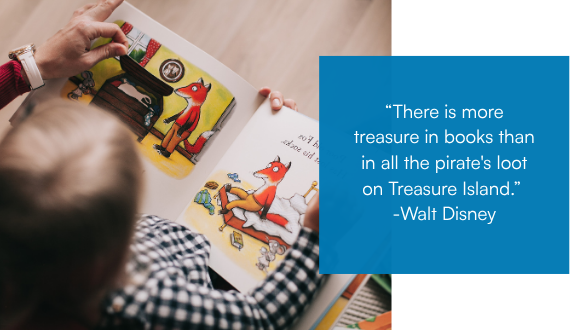
There is something very simplistic yet soul warming about reading a book with your child, the way the words can whisper new magical places in their imaginations, building upon the world as they know it and weaving new ideas and thinking.
There are many benefits that your child experiences when you read with them, a love of books and words is just one of them!
Positive attitude to reading and literacy
When children observe the adults around them finding joy in books and reading it can spark their curiosity around books as well! Creating an environment where books are celebrated helps young children feel more positive when it comes to reading and learning when they head off to school.
Vocabulary and Communication skills
When you read with your child, you are often introducing a rich variety of words that they might not encounter in everyday conversation. This exposure helps them learn new words in context, making it easier for them to both understand and remember their meanings as well as use them in their communication. Preparing your child for school begins well before they are four and books are a powerful learning tool to support them right from birth.
Imagination
Reading to your child is a fantastic way to open up your child’s imagination to new worlds, new characters, new ideas and new perspectives. It is one of the strongest ways you can help support your child’s ever growing thinking skills.
Knowledge of the wider world
Reading with your child also offers them new perspectives, knowledge and understanding about the wider world and the people, places and things that occupy it. Non fiction books can often bring delight to children especially as they get older and become more fascinated with the world around them.
There are of course many ways that whānau can foster a love of reading with their child/ren. These are just some of them:
- Visit your local library. Libraries are magical places that in most cases, offer the community a free (or low cost ) literacy experience. Choosing books together can be an enjoyable experience for young and old alike.
- Display books at home. Displaying books so that children can see the covers can give children the indepedence to choose books themselves.
- Read each day. Did you know if you read a book to your child every day that is a grand total of 1095 books by the time they turn three?! Weaving books into your daily rhythm is a fantastic way to introduce a love of reading for your child.
- It’s never too early to start reading. Even the youngest of infants benefit from storytimes. Sitting an infant or toddler on your lap and cuddling as you read is a fantastic way to strengthen emotional bonds.
- Connect books to real-life experiences. For instance, if you spot a firetruck on the road, link it back to a story or song. Similarly, if there's a dog in a book, relate it to a dog they may have seen somewhere so that they can make connections between their books and their world.
- Observe what captures your child’s interests. When reading with your child try not to just read the text, engage in conversation about the illustrations and respond to their pointing, whether with their fingers or their gaze.
- Creating links between home and ECE. Please feel free to share the names of your child’s favourite books and interests with your child’s kaiako. This can give kaiako new ideas and create a link between home and centre, further strengthening your child’s sense of belonging.
- Read your child’s profile book together. Reading to your child doesn’t need to be limited to just books, reading their early learning profile book with them gives you valuable insight into their learning and an incredible opportunity to hear their thoughts and view this learning from their perspective.
The Evolve Promise
At Evolve we promise to offer a curriculum that fosters your child’s ability to be creative, generate new and innovative ideas, and problem-solve to find solutions to challenges. Reading with children each day is just one of the many ways we deliver on this promise.

Learning to Problem-Solve through Junk Play
What if everyday household items could become powerful learning tools for your child? Junk play transforms simple materials such as cardboard boxes, lids, tubes and fabric scraps into opportunities for creativity, critical thinking and imaginative play. In early childhood education, junk play helps children develop problem-solving, communication, collaboration and fine motor skills while encouraging curiosity and independent learning. Discover why this open-ended play experience is so valuable for children's development and how you can support learning through play at home and in your local Evolve Education early learning centre.
Read more

Pathways to School and Kura
Starting school or kura is a significant milestone for both children and parents. While many families focus on early academic skills, research and educators agree that confidence, curiosity, resilience, communication, and independence are the foundations of a successful transition. Discover how everyday play and simple home activities can help your child develop the lifelong learning skills they need to thrive at school and beyond.
Read more

Raising Creative and Innovative Problem Solvers
Young children are natural problem solvers, using creativity, curiosity and trial-and-error to explore the world around them. At Evolve Education, we intentionally nurture these skills through play-based learning, encouraging tamariki to think independently, embrace challenges and develop confidence, resilience and critical thinking. By supporting children to explore, experiment and discover their own solutions, we lay the foundation for lifelong learning in an ever-changing world.
Read more
