
Water Play
06 December 2024

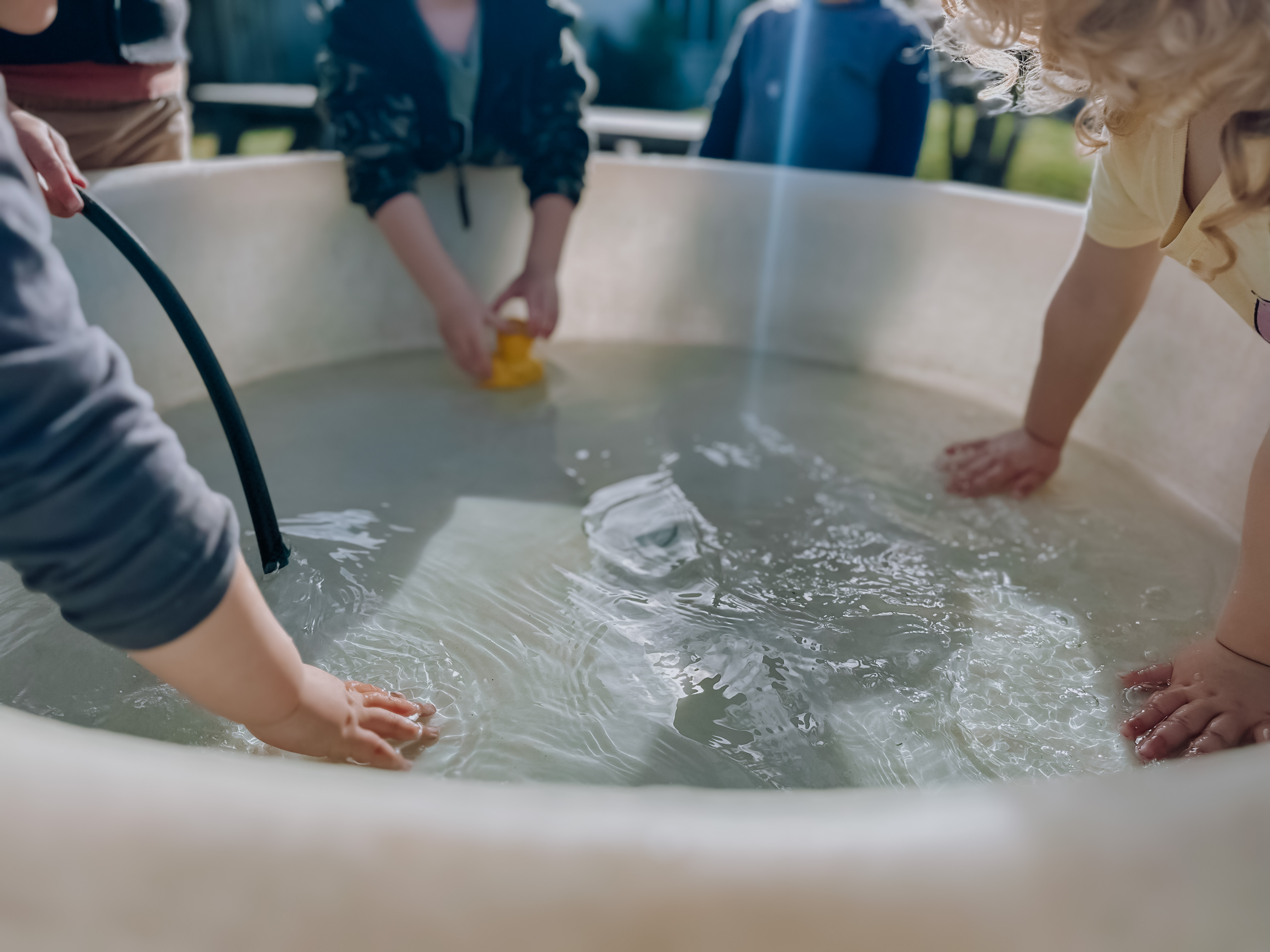
There is no denying the calming effect that water can have on most children! Whether it be splashing in the bath, playing in puddles, going for a swim or engaging with water play, most children are delighted when offered opportunities in these experiences!
Did you know that these experiences with water play are also super beneficial for your child’s development as well? These are just a few of the many benefits:
Strengthening hand muscles
Scooping, pouring and carrying water all help strengthen those all important hand and arm muscles that children will need when holding a pencil and learning how to write.
Hand, eye coordination
Think about the hand eye coordination as well as the concentration that is needed when filling up one vessel from another with water, something that children often do when provided with water play and various recycled containers!
Gross motor skills
Playing, splashing as well as running
through a good old fashioned sprinkler all do wonders for children’s gross motor skills! Children often use their whole body when exploring and learning with water.
Maths and science concepts
Water play introduces maths and science concepts- do items float or do they sink? Why is this?... How many scoops of water to fill this container? There are many ways that maths and science can be woven into this learning experience.
The best part of water play is that you do not need to add anything to the water to make it any more or less inviting for children! Water straight from the tap is enough to excite any child and simple equipment such as containers and vessels from around the home such as natural resources such as pinecones, stones and shells are all fantastic additions.
Keeping children safe around water
As with most activities undertaken with young children, water play is one that needs direct supervision at all times.
Here are some tips around keeping your child safe around water.
- Always keep your child within arms reach when they are engaging with water play, never leave them unattended or take your eyes off them, even for a little moment.
- When children are finished with water play pack up and empty the water out. Water in it’s natural state (with nothing added to it) is perfect for watering plants and gardens- this is a fun way to empty the water with your child and also helps them to learn not to waste this valuable resource.
- Ensure any home pools or any bodies of water are adequately fenced and inaccessible to children when you are not around.
- Be aware of ALL water that is around - even shallow water in buckets are a hazard for unsupervised children.

Keeping things Consistent
In a time where there is a lot of instability and unknowns within in our communities, it is more important than ever to protect our children’s sense of security and belonging. One of the ways that this can be achieved is by keeping things consistent, but what does this really mean and what are the benefits of this for your child?
Read more

The Magic of Twigs, Stones and Leaves: using natural materials in your child's play
In a world where ‘educational’ toys and equipment are promoted heavily across different media settings it seems important to share some of the very real ways that you can help support your child’s learning and development through the use of natural materials which are easier both on the planet as well as on your wallet!
Read more

Te Whāriki for Whānau
As a parent, navigating the world of Early Childhood Education can often feel daunting, and at times, it may seem like you’re trying to grasp an entirely new language, one that may even differ from centre to centre based on their unique philosophies! However, there is one common thread among all early learning services in New Zealand: they all follow a bicultural early childhood curriculum called Te Whāriki.
Read more